land:form
land:form - Bringing landowners and communities together to unlock difficult sites.
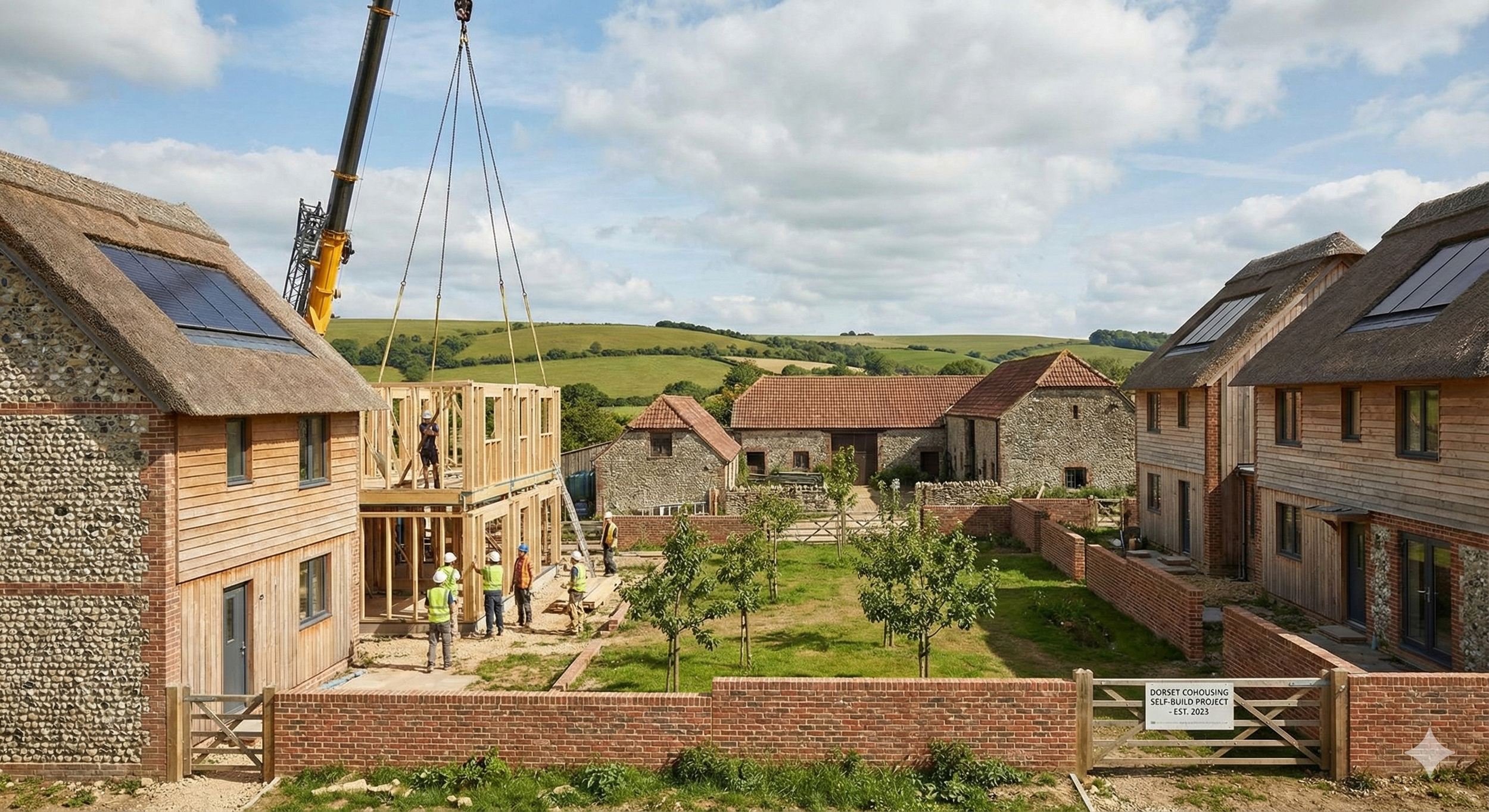
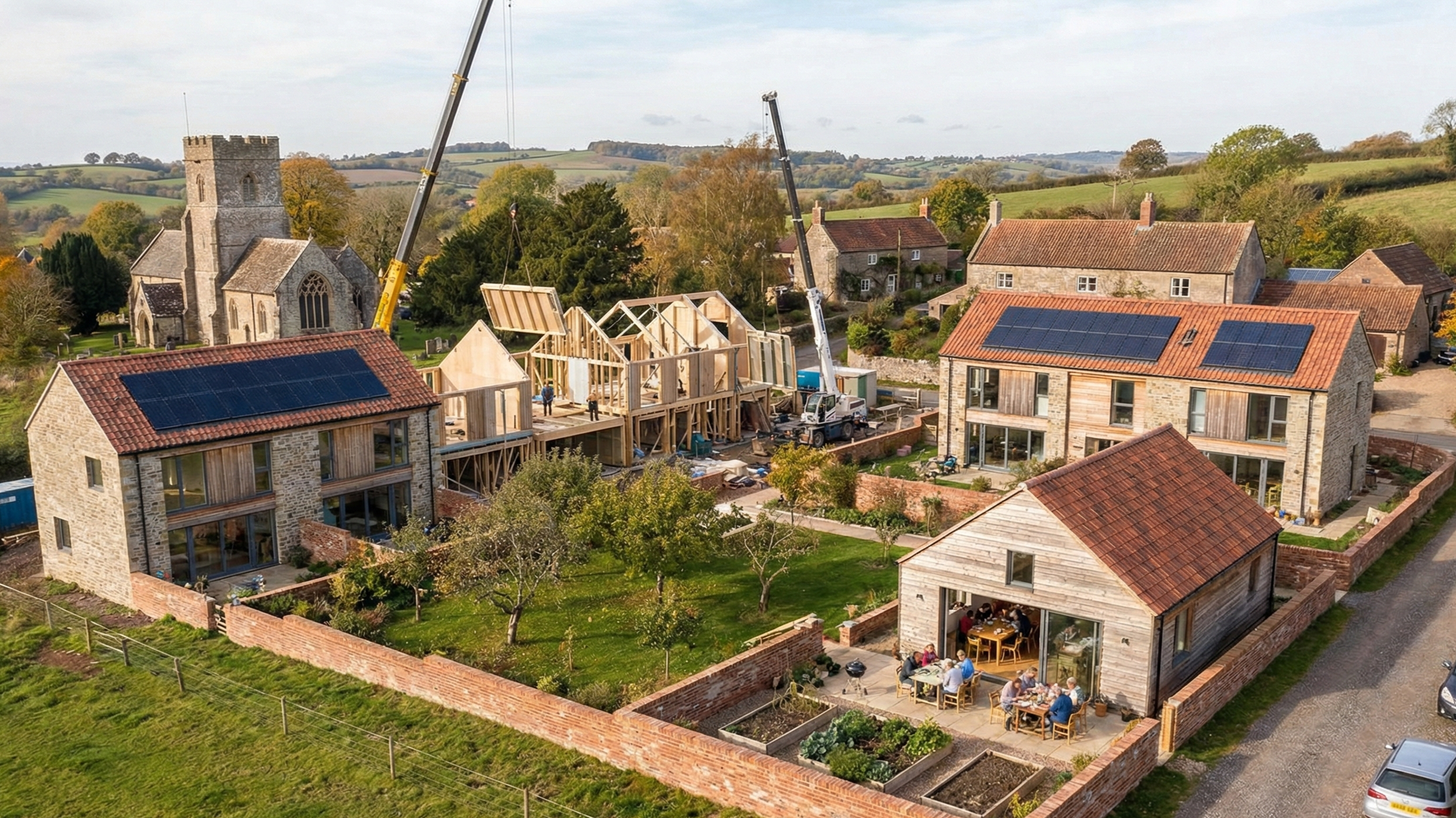
our land:form approach is designed to unlock sites that are marginal, complex or outside conventional development boundaries, and to do so in a way that reflects local housing needs, delivers community value, and aligns with national planning policy. working with landowners and self-builders, we want to quietly revolutionise housing delivery for sites for up to 9 homes by bringing built form to land.
self-building and cohousing made simpler, by partnering people with plots.
Bringing landowners and communities together to unlock difficult sites for self-builders.
Do you dream of enabling beautiful, sustainable, locally supported homes on your land? Are you wishing you, your family, friends and likeminded folks could build a multi-generational community?
Landform is Barefoot Architects’ specialist land and planning offer, delivered in partnership as part of a pioneering project to unlock self-build sites across England for between 1 and 9 homes (larger sites are possible via a different route).
With a no win no fee approach to Planning in Principle (PiP), we might have the answer for you or your site.
We focus on sites others overlook; marginal land, edge-of-settlement plots, and complex locations outside the development boundary - and help turn them into viable, community-led housing opportunities.
We work at the earliest, riskiest stage: establishing whether a site can be developed at all. By combining planning strategy, community-led housing models, and strong design thinking, Landform helps unlock planning permission where conventional approaches fail.
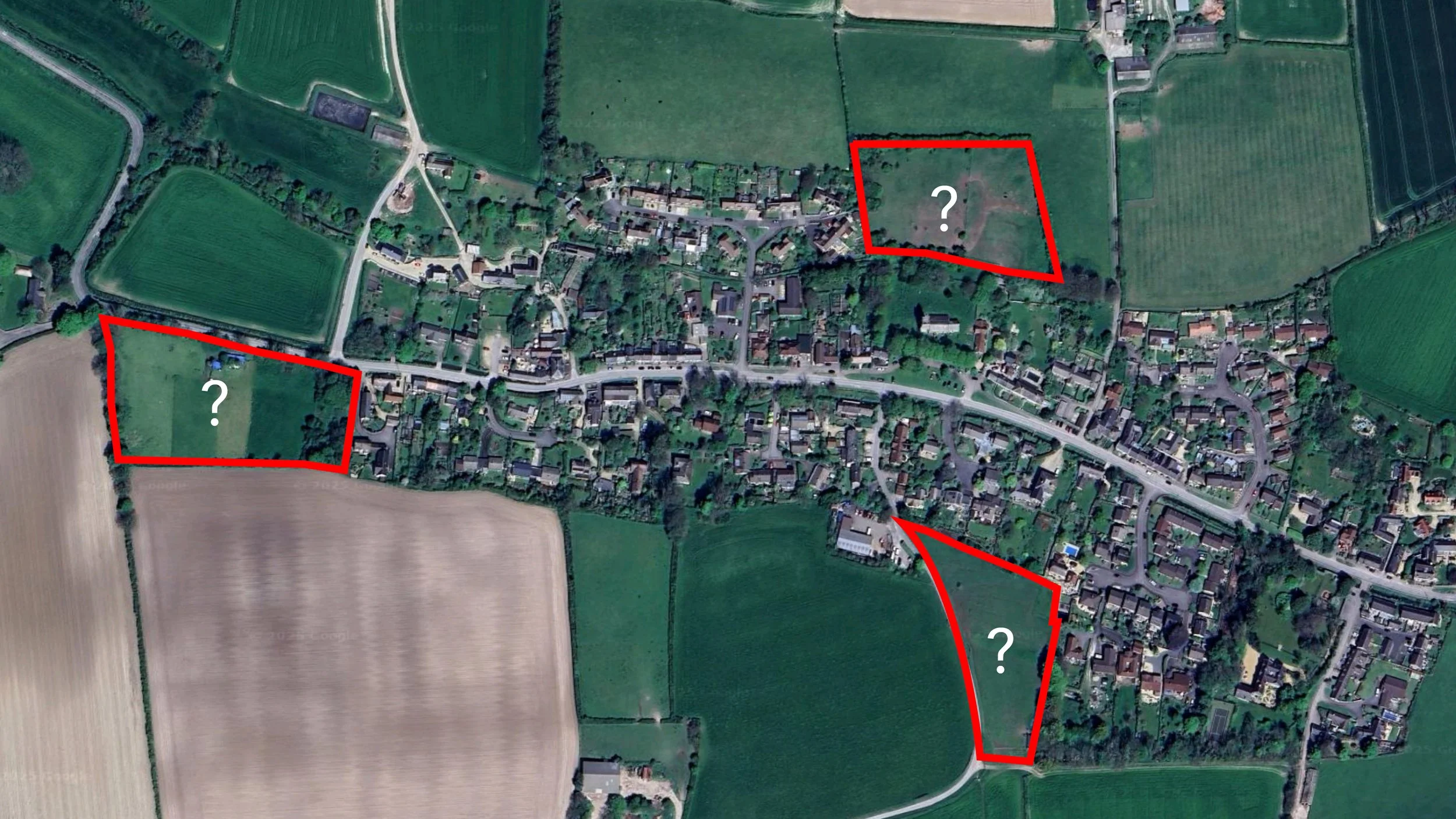
do you own land that’s been called “too difficult”?
You may own land that sits:
On the edge of a village or town
Outside the development boundary
Adjacent to existing homes, services or infrastructure
Awkwardly shaped, constrained, or historically dismissed
Previously refused or advised against through pre-app discussions
Often these sites are labelled undevelopable - not because they lack potential, but because they don’t fit standard speculative housing models.
Land Form exists for exactly these sites. It isn’t a silver bullet, but does leverage national planning policies and local self-build registers.
might you be The ideal landowner?
You might be:
A private landowner, farmer or family trust
Someone who wants to realise value from land responsibly
Open to alternative routes beyond selling to a volume housebuilder
Interested in a lower-risk, values-led approach to development
Wanting to use your land for a legacy project in your community or family
If this sounds like you, and you are interested to explore this further with us, then read on, or get in touch.
We want to help you to beat the system and support more people to build better homes for themselves in a fair way for everyone.
Planning in Principle : with no upfront risk
We begin by seeking Planning in Principle (PiP) — a formal planning route that establishes whether housing is acceptable on a site before significant cost is incurred.
We assess the site with you
We lead the PiP process
No win, no fee
If PiP is not achieved, you pay nothing
If PiP is successful:
A success fee is paid
Barefoot receives 25% of the fee
You decide what happens next
Why PiP?
Planning in Principle is increasingly recognised by local planning authorities as a legitimate route to test whether development on a site is acceptable in principle before any detailed design is undertaken.
This is particularly useful for sites where Local Plan allocations are absent or unclear, but where NPPF policy may still support sustainable development.
choices after pip:
When PiP is achieved, you have choices:
Option A:
Sell the site, now with a clear planning signal, at an enhanced value.
Option B:
Work with us at barefoot architects to progress Technical Details Consent and bring self-build plots, cohousing* or a group self-build / cohousing project forward - potentially funded, in full or part, by the group.
*Here we introduce an important policy advantage: community-led development.
The revised National Planning Policy Framework (NPPF) includes explicit support for community-led housing, including through ‘exception site’ policies that enable development where it would not otherwise be permitted and for self-build and custom-build housing, helping to widen the supply of homes tailored to local needs. It also encourages planning authorities to support small sites coming forward for community-led development and self-build.
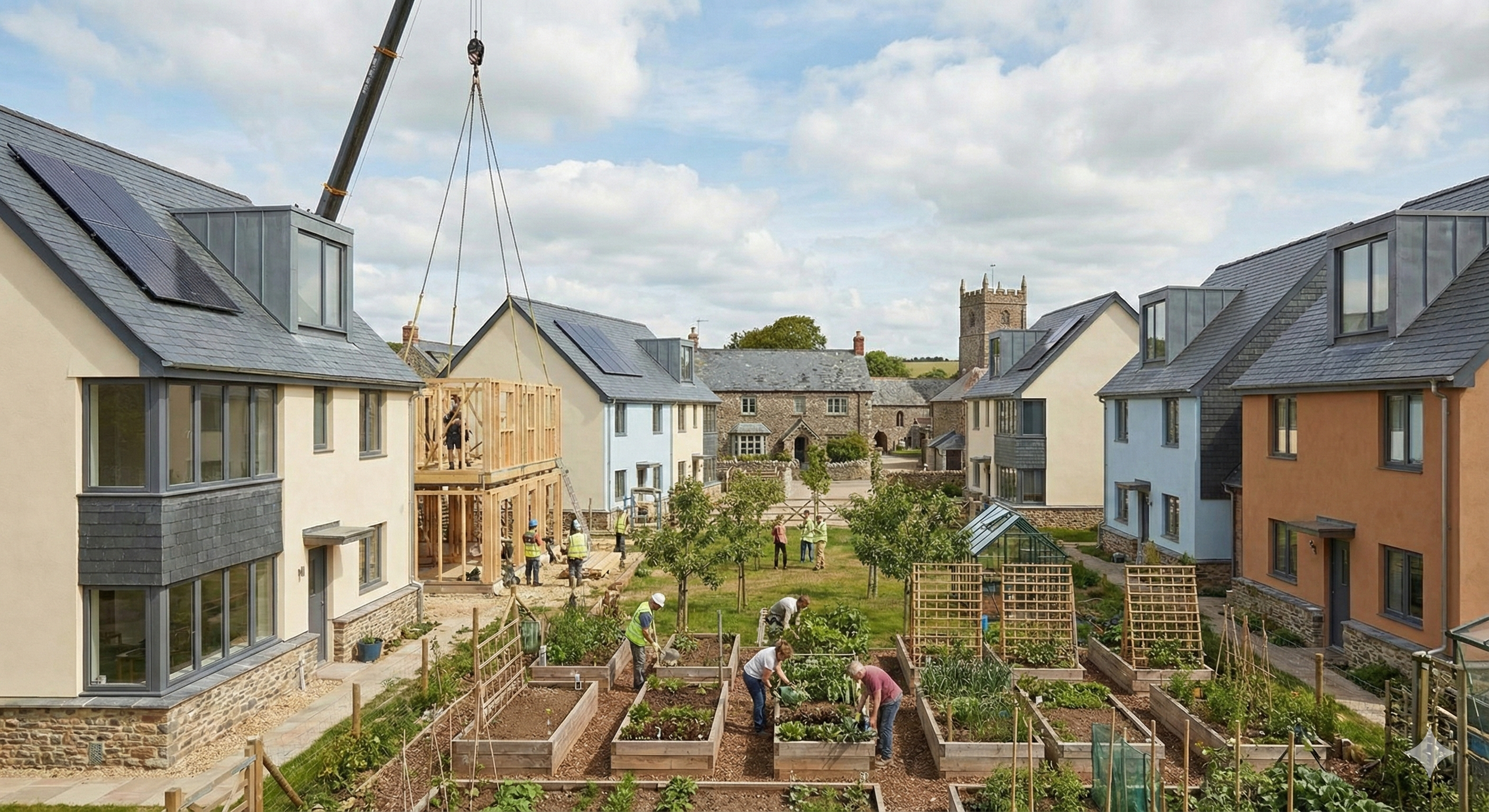
Bringing on a Cohousing or Group Self-Build Community
This is where value, community and policy alignment meet.
Why involve a cohousing group?
They bring demonstrable community support to a scheme — a powerful asset in planning negotiations.
Groups organise future residents early, reducing market risk and strengthening sales or delivery certainty.
Their participation signals long-term stewardship, which resonates with local authority planning interests.
The group may be able to fund the entire Technical Details Consent - removing ALL pre-sale / pre-development costs for you as landowner.
Under updated NPPF policy, community-led housing is defined and encouraged precisely because it can deliver homes on sites that “would not otherwise be suitable for conventional development” and provides genuine local benefit - including affordable housing and other community end uses.
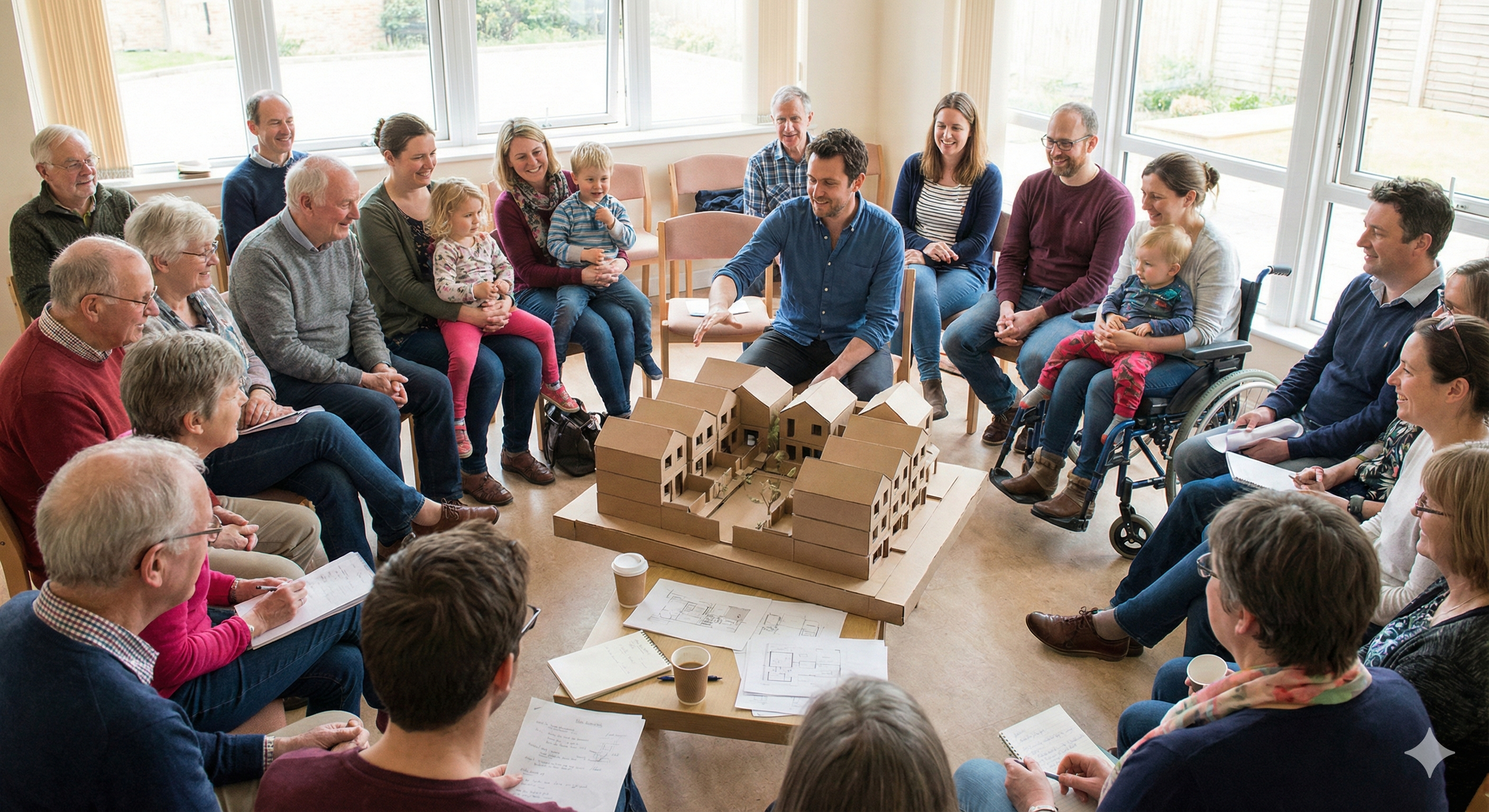
Are you part of a cohousing or community group?
Looking for land but struggling to find viable sites?
Priced out of the open market?
Seeking a planning-positive route to self-build?
Ready to organise as a group but missing the land?
we want to connect you to landowners - and help turn shared ambitions into real places with the best chances possible, and the risk and costs of planning reduced significantly.
Cohousing group benefits include:
Access to land at reduced open market value
Helps a scheme meet affordable housing expectations (NPPF paragraph 64 expects affordable housing - defined locally, unless exceptional circumstances apply).
Community led, self-build housing is a recognised form of affordable housing
A clear pathway from early planning principle to delivery
A framework for long-term community-led stewardship
We can use our experience as cohousing experts to bring these threads together and form small cohousing projects of up to 9 houses via PiP, or more via other routes.
compelling for landowners & and communities
For landowners
Cohousing groups purchase land at a reduced open market value
Some Cohousing groups could fund the Technical Details Planning Consent
This may enable schemes to comply with affordable housing policy
In many cases, this makes the difference between refusal and approval
You unlock value from land that may otherwise remain un-developable!
For cohousing groups
Access to land at a discounted rate
A clearer planning pathway
Professional planning and design support
A site selected specifically for community-led housing potential
It’s a genuine win-win:
Landowners unlock value responsibly
Communities gain access to affordable land
Planners see policy-aligned, deliverable schemes
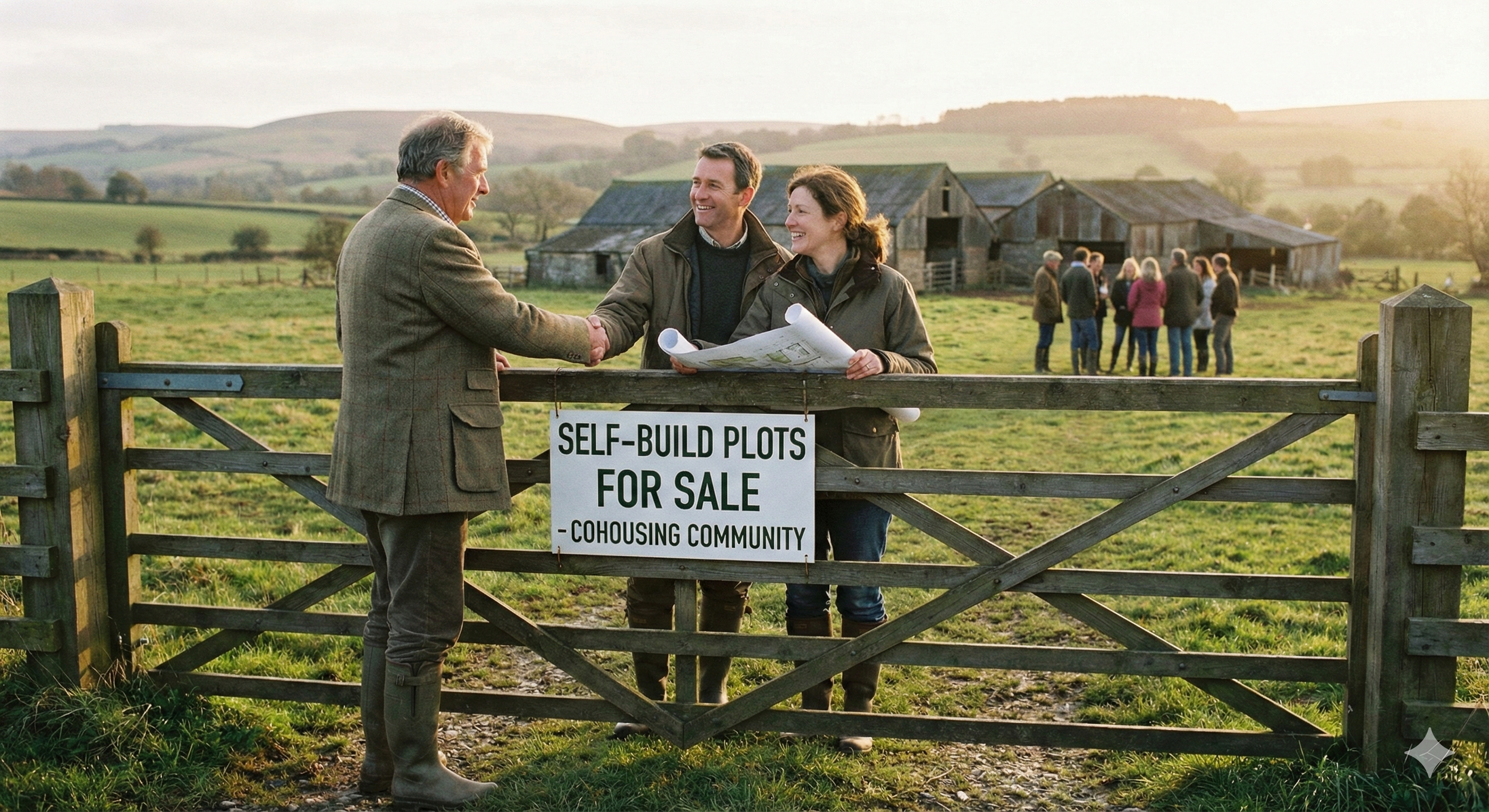
step by step summary
1. Site Assessment - Free Appraisal Understanding Site Potential and Planning Constraints (AONB, Heritage, Landscape etc)
2. Planning in Principle (PiP) - No Win, No Fee (Led by LivedIn)
3. Unlocking Permission for Community-Led Development - Technical Details Consent (By Barefoot Architects)
4. Bringing on Individual Self-Builders, or a Cohousing / Group Self-Build Community
5. Delivering a Win-Win Outcome of Serviced Plots For Sale at reduced Open Market Value
With offices in Bristol and Totnes, we serve the whole of the south of England - Cornwall, Devon, Dorset, Somerset, Gloucestershire, Wiltshire, sussex, surrey, hampshire and beyond!