
Designing accessible and inclusive homes that work for everyone
It’s just over 10 years since changes to the Building Regulations Approved Document M introduced two optional housing design standards with higher requirements for accessibility.
Homes designed to M4(2) Accessible and Adaptable Dwellings standard are intended to be suitable for some older or disabled people and allow adaptation to meet occupants’ changing needs over time. Homes designed to M4(3) Wheelchair User Dwellings standard are specifically designed to meet the needs of occupants who use wheelchairs, or to allow straightforward adaptation to meet these needs in the future. Both standards are a huge improvement on the baseline M4(1) Visitable Dwellings standard which all new homes are required to comply with - but stipulates only very basic requirements including step-free access, an entrance-level WC, and minimum circulation space at entrance level.
New accessible homes for Bristol City Council
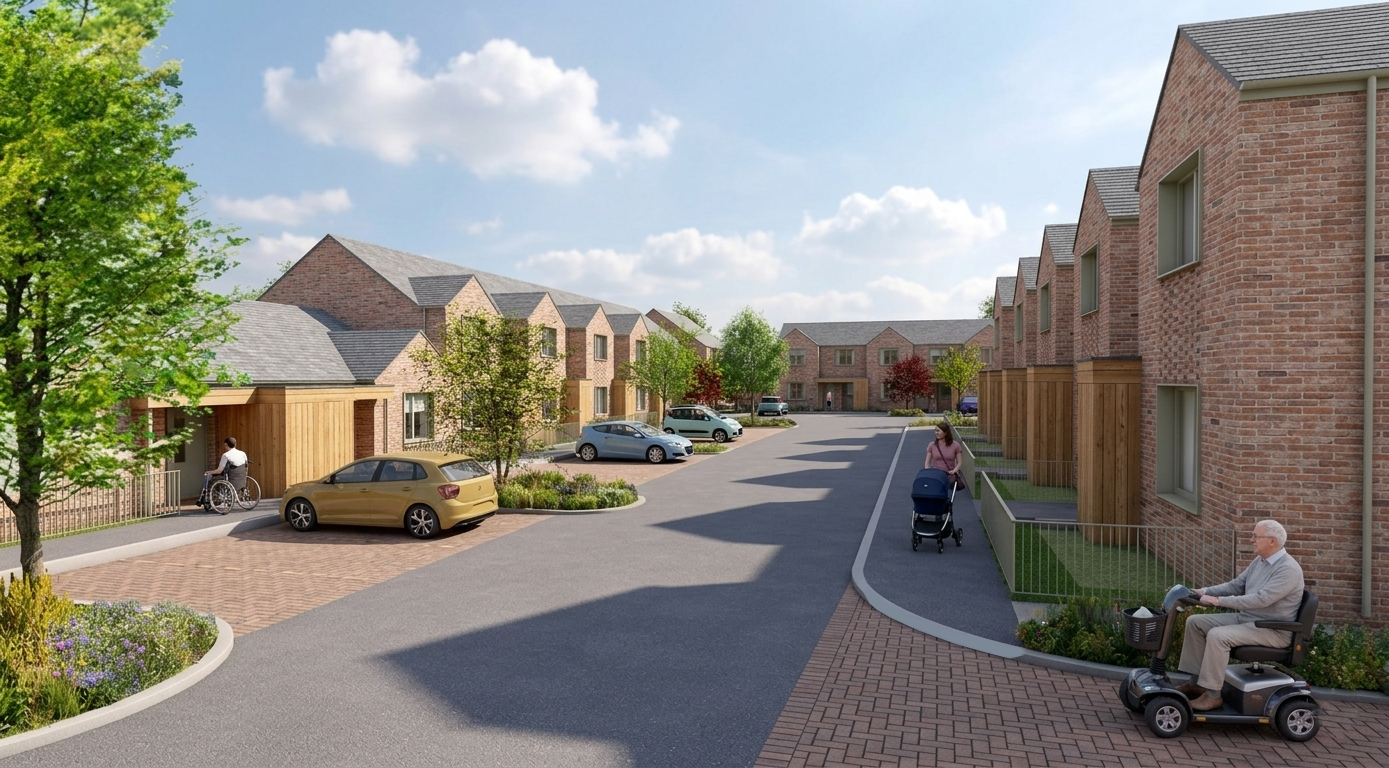
At Lacey Road, Stockwood, Barefoot Architects have been working on a Bristol City Council project for 26 accessible new homes, all of which exceed the M4(1) baseline standard.
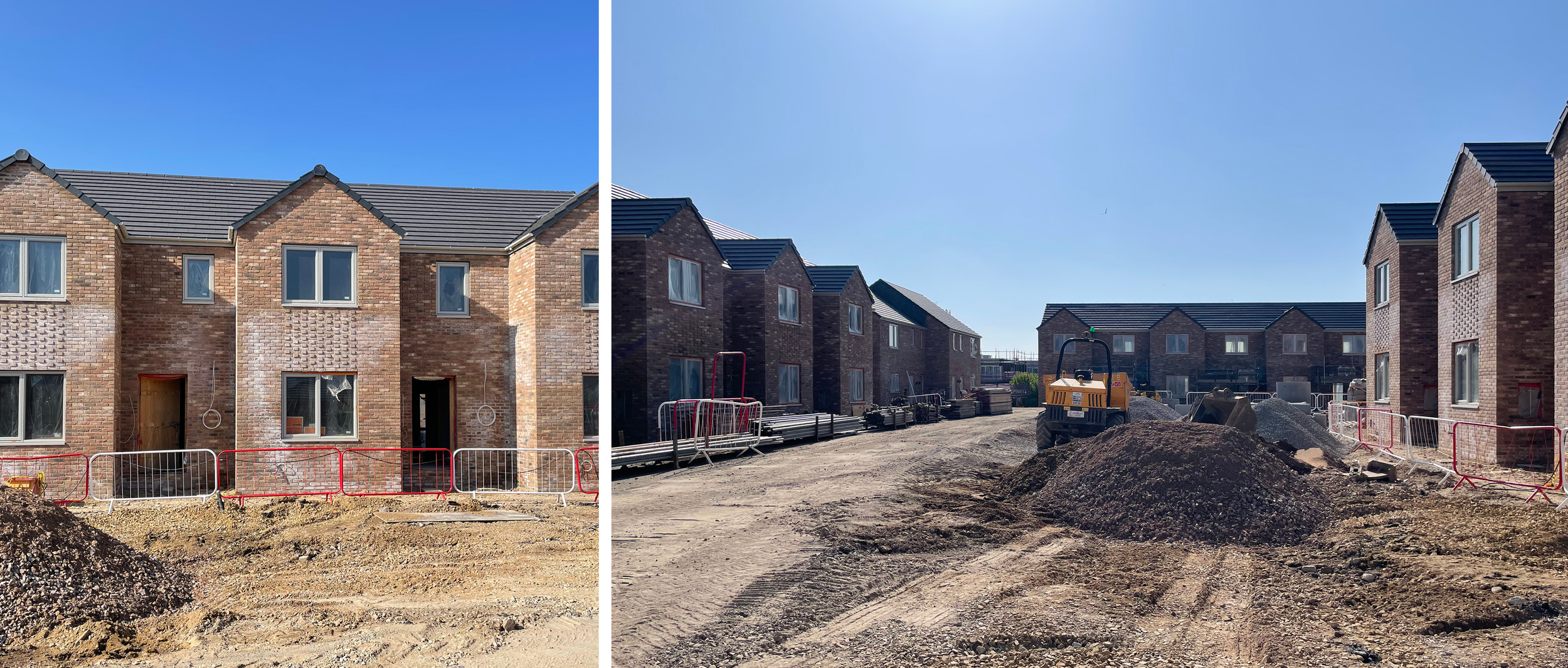
New accessible and adaptable homes under construction in Stockwood
Wheelchair User Dwellings
The scheme will include four new M4(3) compliant wheelchair accessible bungalows. Each unit has a large parking space in close proximity, an accessible approach route, as well as level and step-free private outdoor space. Inside, the single-storey dwellings are intended to be fully accessible to a wheelchair user. The standard includes very specific space requirements which the layouts have been carefully designed to incorporate. These include adequate circulation space and access zones throughout the dwelling, minimum room sizes, and allowance for furniture. A space for wheelchair storage and transfer is included, as well as suitable built-in storage.
Kitchen provision is described in detail within M4(3) – the kitchens include a height-adjustable worktop, hob, and sink; appliances installed at suitable heights, and user-friendly larder units with drawers or swing-forward inserts. Bathrooms have been designed as wet rooms with a shower or future bath, shower seat, raised height, extended projection WC and large basin - with potential for installation of hoists, grab rails and adaptations.
In addition to M4(3) requirements, we also worked with BCC's Accessible Homes team who advised on the incorporation of additional features – including a knock-through panel to create a direct connection the bedroom and bathroom in future if required, with the ability for a hoist able to be installed above, and bedroom layouts which could be reconfigured to comfortably fit a single bed and larger hospital bed if needed.
The height of sockets, switches and other services are designed to be at specific heights – as required by M4(3) - to ensure they are within easy reach, and taps and door handles are easily operable. Low window sill heights - which ensure there is a view and windows are operable from seated position - are also incorporated.
Accessible and Adaptable Dwellings
The remaining 22 homes at Greville are designed to be M4(2) accessible and adaptable dwellings. The requirements include minimum accessible standards for the approach route, entrance and external doors; there is increased circulation space throughout the dwelling; minimum space requirements and provision for sanitary facilities; as well as accessible heights for services and controls. These standards mean that homes will be much more comfortable to live in and navigate for many occupants, more genuinely accessible to all visitors, and they should allow a person to remain independent for longer in their own home.
Policy context
Despite the introduction of M4(2) and M4(3) 10 years ago, their status as optional requirements mean that they fall short of ensuring that suitable, safe and accessible new housing is available, in the all locations, to those that need it. Many homes are still being designed to the baseline M4(1) standard, which sets a low bar and is unlikely to make homes truly accessible to visitors, while also making them very difficult to adapt to changing needs over time. The availability of accessible housing to meet local needs is critical to the wellbeing, independence, and safety of disabled people as well as older people - but provision is currently inadequate*, with significant regional differences and disparities across tenure types, leaving many people left struggling to find a home that is suitable.
The government recently consulted on changes to the National Planning Policy Framework (NPPF), which included proposals to set clearer expectations for accessible housing to meet the needs of older and disabled people.The proposals would require local authorities to set the proportion of new housing that should be delivered to M4(2) and M4(3) standards, but would introduce a national minimum of only 40% for M4(2) standards, with no corresponding national minimum for homes meeting M4(3) standards. The proposed changes are seen by many as a significant step back from previous government commitments to make M4(2) the minimum standard - there are concerns this will do little to improve the availability of suitable housing for wheelchair users, and could be detrimental to the delivery of M4(2) housing, as the proposed 40% requirement is lower than some current delivery forecasts.
Moving forward
Everyone should be able to find a home that offers them independence, safety, in a location within their community. Organisations including Habinteg have long argued that the current M4(1) baseline is inadequate, and call for setting the M4(2) Accessible and Adaptable homes standard as the minimum for all new housing, as well as requiring local authorities to set minimum targets for % of homes to meet M4(3) wheelchair user standards to meet local housing needs.
What can Barefoot Architects do?
In the meantime, Barefoot Architects will continue to promote the importance of accessible design to our clients. We will seek to incorporate M4(2) standards as a minimum into all of our new housing projects - which means considering the additional space requirements and site levels at an early stage - and will look for opportunities to incorporate M4(3) dwellings into new housing schemes. As a team, we are always learning – and are committed to continuing to increase our understanding of how we can embed accessible and inclusive design throughout our work.
*Habinteg; A forecast for accessible homes 2025