
Building the Neighbourhoods We Need - Five lessons for successful cohousing
It takes a village to raise a child, but what about the rest of us? At an event co-hosted by UK Cohousing Network (UKCN) and Barefoot Architects, cohousing pioneer Charles Durrett joined a room full of Southwest housing professionals and prospective residents to explore examples of “High Functioning Neighbourhoods” that have community built in as standard, and how to create them successfully.
Cohousing creates intentional communities where residents have been very deliberate about creating the life they want to lead - normally one of feeling connected and supported.
US Architect, Charles ‘Chuck’ Durrett has written several books on Cohousing. Learning from the growing movement in Denmark in the 1970s (where 4% of housing is now cohousing) he has spent his career co-creating housing schemes with cohousing groups in the US and Canada. The panel featured Sam Goss (Barefoot Architects), Caroline Pringle (Ecomotive), and Judith Griffies (Bridport Cohousing). Together, they demonstrated how intentional cohousing models build high-functioning communities where residents actively support one another across every stage of life.
Currently, less than 0.01% of housing built in the past decade in the UK is cohousing. It remains a rarity in our housing system. For those pursuing cohousing developments, barriers are commonly linked to land acquisition, financing complexities, and lengthy planning processes. Cohousing takes time, tenacity and strong community relationships to pull off, but those who have succeeded show that it pays off many times over in terms of belonging; social support, friendship, purpose, health and happiness.
Here are five takeaways from the evening, towards developing high functioning neighbourhoods.
● It’s all about the Culture. What is our culture now? What culture do we want? And how do we get there? Chuck asks these questions right at the beginning of every project to shape both the brief and the group. Should we be asking the same of our housing policy and delivery mechanisms? Is our housing policy serving us? What could it be, and how do we change that?
● Activism works. The power of a group of people with an agreed goal shouldn’t be underestimated. Chuck advises that residents advocate for themselves loudly, in person and, crucially, in numbers as a group. It’s easy to say no to a professional, but harder to say no to a group of mums all striving towards a common goal. .
● Connections count. Chuck introduced the three cups of tea rule. Building trust, mutual understanding, and forging human connection (over a cuppa) improves communication, brings people together and makes the journey easier – both within the cohousing group members, or by building bridges and influence with the wider community.
● 1+1=3 This is what Durrett calls ‘cohousing math’ Many cohousing groups use consensus based decision making - with the result that collaborative problem-solving is more innovative, with longer lasting results. Your idea plus my idea equals a better idea.
● Cohousing communities care about each other rather than for one another. But this also means that older people and people with learning difficulties or cognitive decline are supported longer, and more holistically within their own communities - reducing emergency admissions, delaying the need for formal residential care, and tackling loneliness as the root cause. Communities that care about each other alleviate pressure on local health and social care systems, saving finite public resources and costs to the state.
Chuck shared stories of cohousing developments from all over the world. He shared photos of people eating and laughing together, playing cards on their front stoops, and kids riding their bikes along carless roads. He showed intergenerational communities and specialist communities like the Solheimar Ecovillage neuroinclusive community in Iceland and the seniors community in Vancouver whose goal was to create a place where they would have more fun in the second half of their lives than they did in their first. He showed the importance of the life between the buildings - where the communities blossom.
Developing cohousing in the UK is slowly getting easier. Community-Led (which encompasses cohousing) is now mentioned in the NPPF, and is widely recognised as delivering vibrant, self-sustaining communities that dramatically lighten the load on statutory services. UKCN and the cohousing community are working with the government to define cohousing as a well-supported exception that should hold a privileged position in the planning system. There is a latent demand for cohousing. Now is the time for it to blossom to create the ‘villages’ of the 21st Century that will support everyone.
With thanks to Charles, Caroline and Judith for sharing their experiences, UKCN and Barefoot Architects for the evening, and to the packed audience of well-informed and engaged people.
Sam Goss
Founding Director, Barefoot Architects
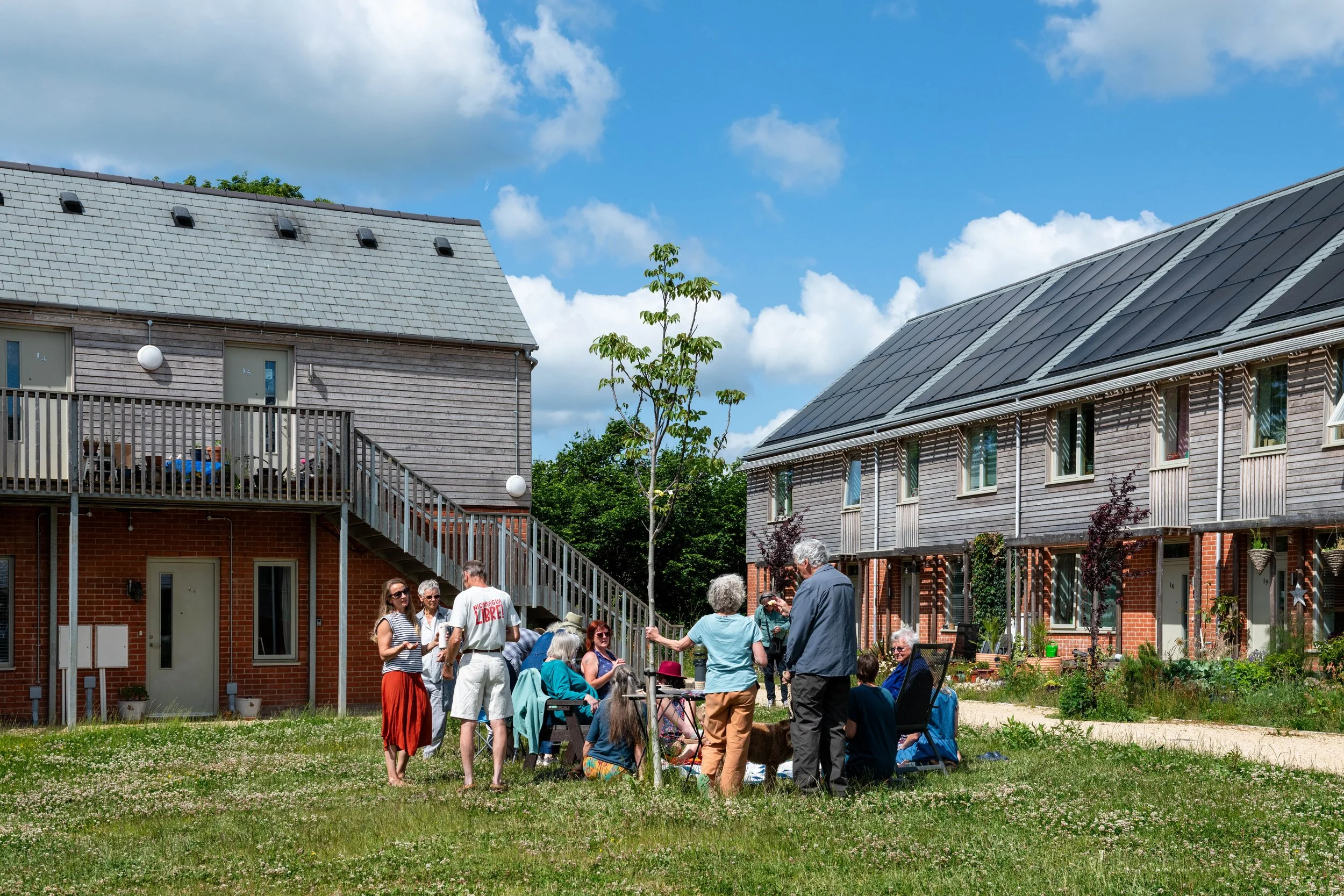
Bridport Cohousing
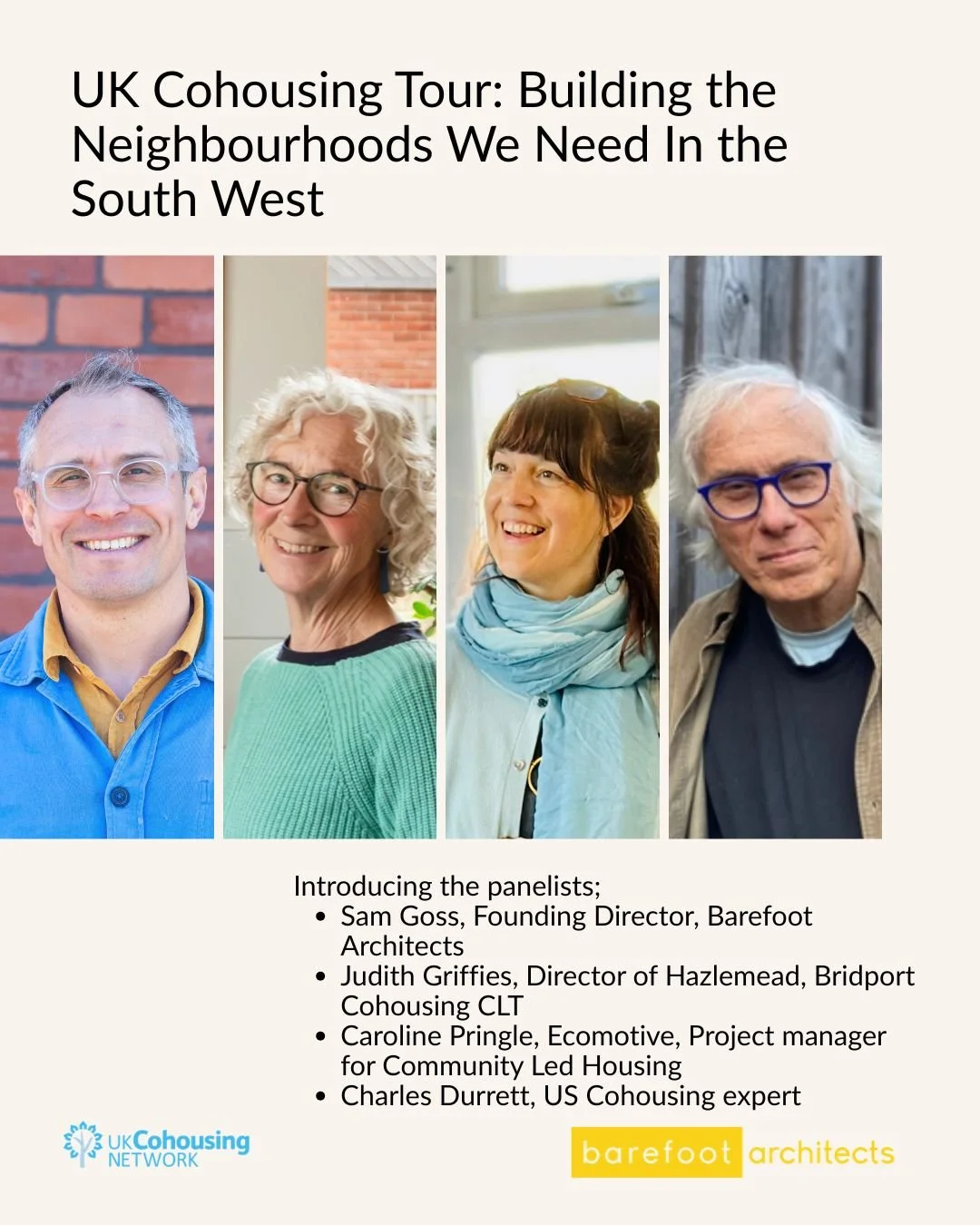
UKCN x Barefoot Architects Panelists
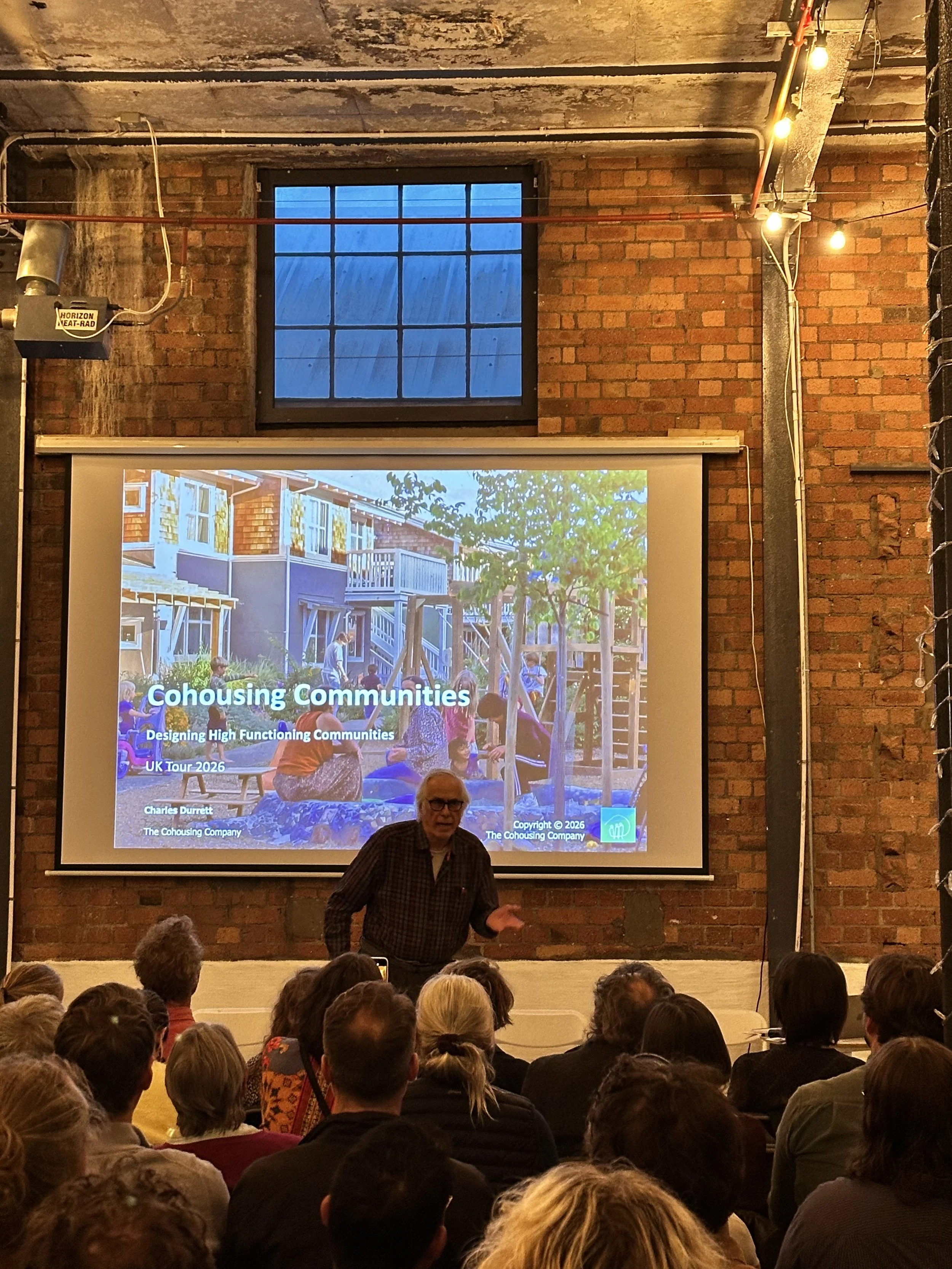
Charles Durrett talk
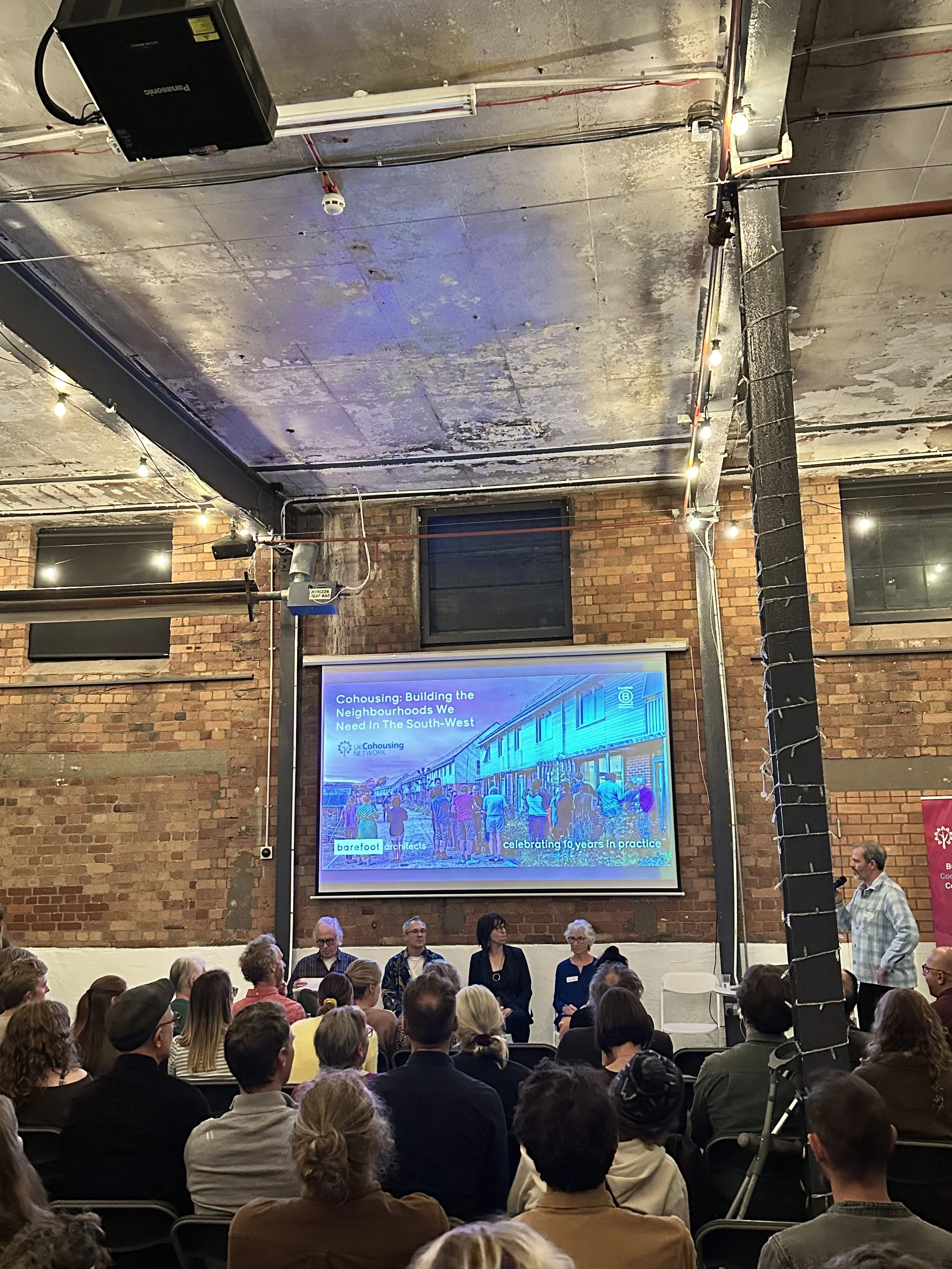
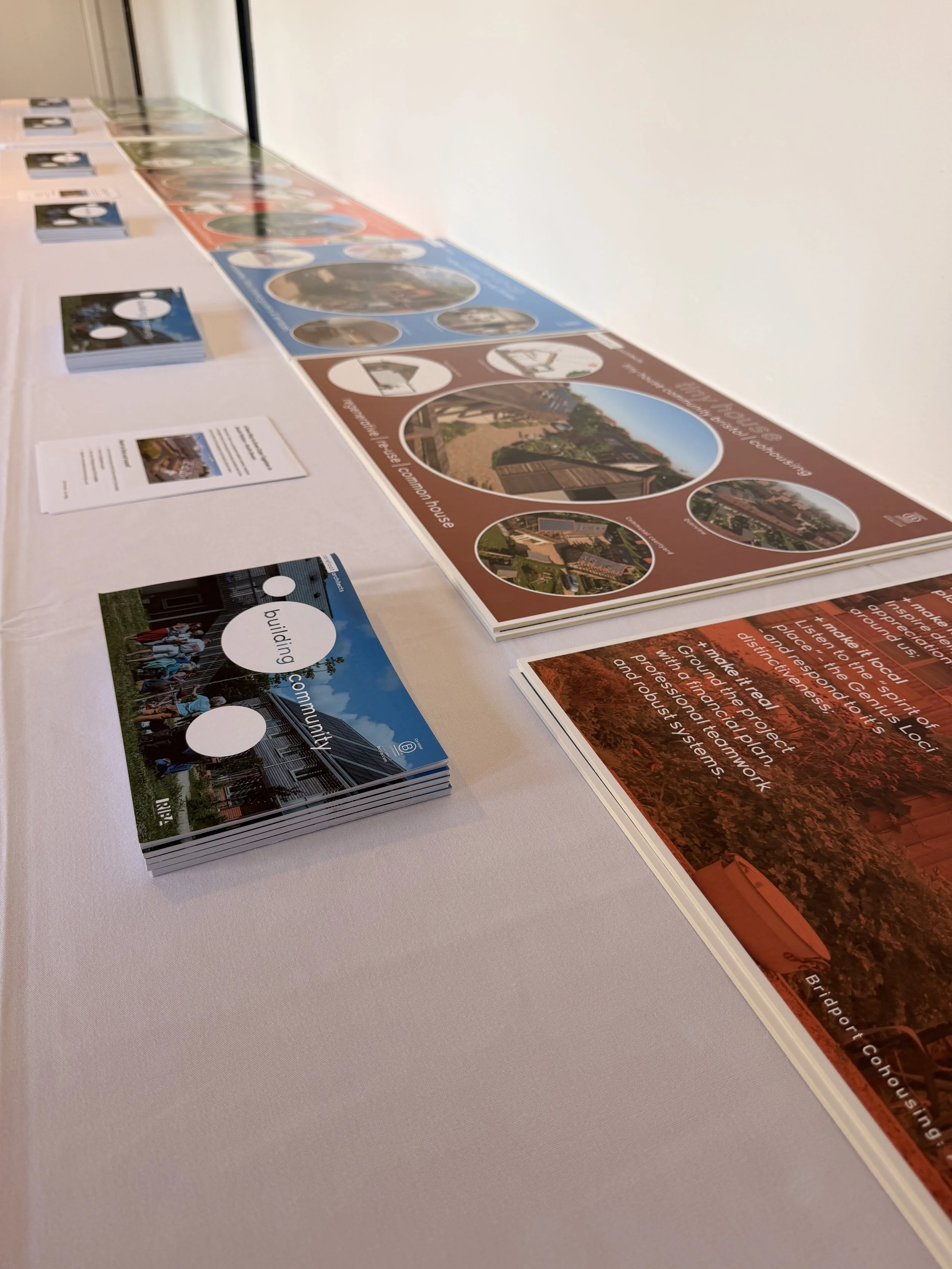
UKCN x Barefoot Architects Panel Discussion