
From SPAN to Cohousing: What Highsett Can Teach Us
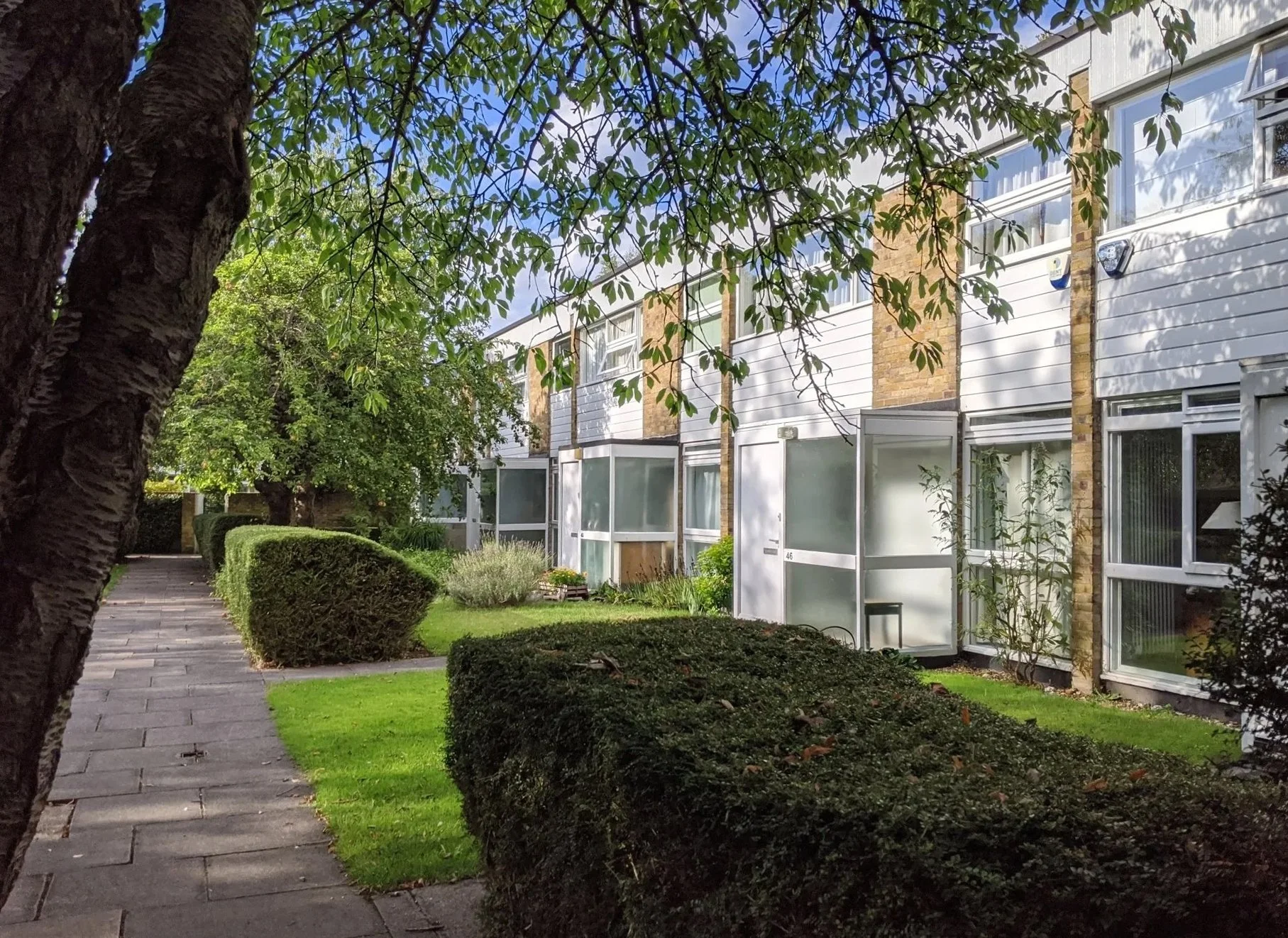
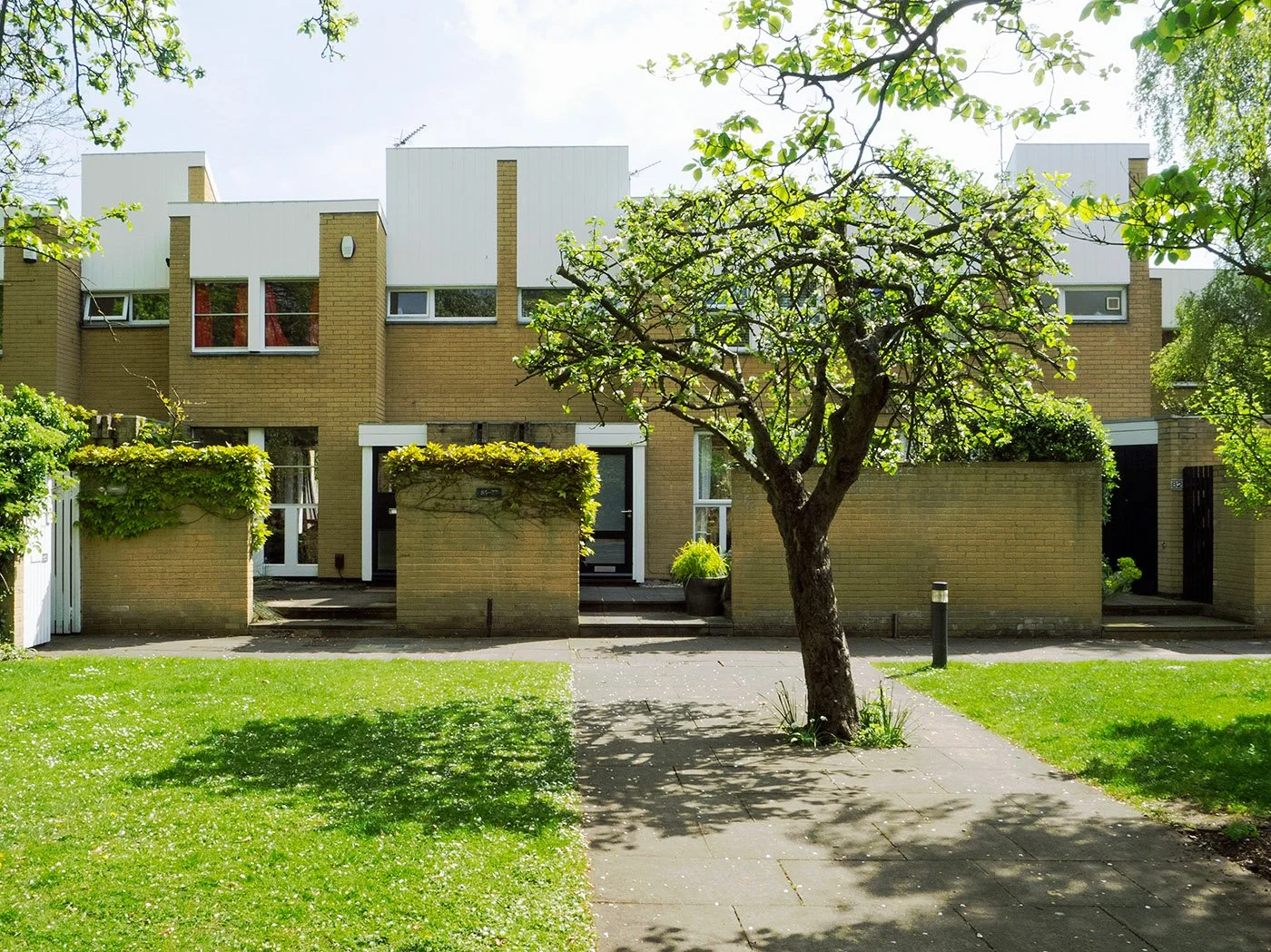
Recently in the office we’ve been thinking a lot about the barriers to developing more cohousing in the UK, and while there are many (funding, availability of land, planning), we think one of the most significant barriers is cultural. The idea of home in the UK is inextricably linked with privacy. While at Barefoot we think that cohousing means community, connection and shared spaces — which in turn leads to stronger connections with neighbours, more mutual aid and less loneliness and isolation — many people we speak to fear that it means a lack of privacy and freedom.
This week I’m back in my childhood home in Cambridge for half term, and being here has made me think more about these issues. I grew up in Highsett, which is a 60s SPAN estate designed by Eric Lyons. Looking at it now, Highsett could be seen as a kind of proto-cohousing. Each house has a small private garden to allow for generous, high-quality shared gardens. The houses are arranged around these gardens to promote connection between the residents and so that children could play freely, with lots of potential eyes looking after them. Cars are kept separate, both to keep most of the gardens car-free and to foster connections between residents who regularly meet while walking to and from their houses.
As a child, living here was brilliant. There were lots of other children, and the way it is designed meant we could run around freely, climb trees, roller-skate and play football. But growing up here in the late 90s and early 2000s, there was always some tension. Not everyone was happy with noisy children playing freely, and apart from the children the gardens seemed very underused. The 60s and 70s ideals of community and shared spaces had fallen away to a more individualistic outlook, fuelled further by rising house prices and a strengthening desire to protect the ‘house as asset’. I vividly remember a heated debate about erecting gates to make Highsett a gated community (in a very affluent part of Cambridge), culminating in a referendum. In the end, some entrances were gated and some weren’t, satisfying no one but allowing everyone to move on.

I think there are interesting lessons in these earlier experiments in housing. Their histories chart the changing attitudes to home and housing, and a more in-depth look at what worked and what didn’t would be very valuable. While cohousing may not be for everyone, we know there is a huge demand for it, and that there is a big gap in available housing that promotes shared spaces and community. I’ve experienced first-hand the benefits these can bring, and hope that they become more available to more people over the coming years.
Written by David Caldwell